Blog
Educate • Empower
Is My Knee Pain Permanent?
Is My Knee Pain Permanent?
Education |14 May 2026| Dr. Dann
Why “Bone on Bone” and Arthritis Do Not Always Mean You Have to Stop Doing What You Love
If you have been told you have “bone on bone” knees, arthritis, degeneration, or “wear and tear,” there is a good chance you walked away feeling discouraged.
Maybe you started wondering:
“Is this just what happens when you get older?”
“Will I eventually have to stop working out?”
“Am I damaging my knees every time I move?”
“Is surgery my only option?”
At I.MOVE., we work with active adults every day who have been told some version of these things. And while those diagnoses can absolutely be part of the picture, they often do not tell the full story.
The Biggest Mistake People Make With Knee Pain
Many people assume that if imaging shows arthritis or degeneration, that must automatically be the reason they hurt.
But here is what most people are never told:
A lot of people have arthritis on imaging and no pain at all.
And a lot of people with severe knee pain have issues that go far beyond what an MRI or X-ray can explain.
Pain is often much more complex than “bad knees.”
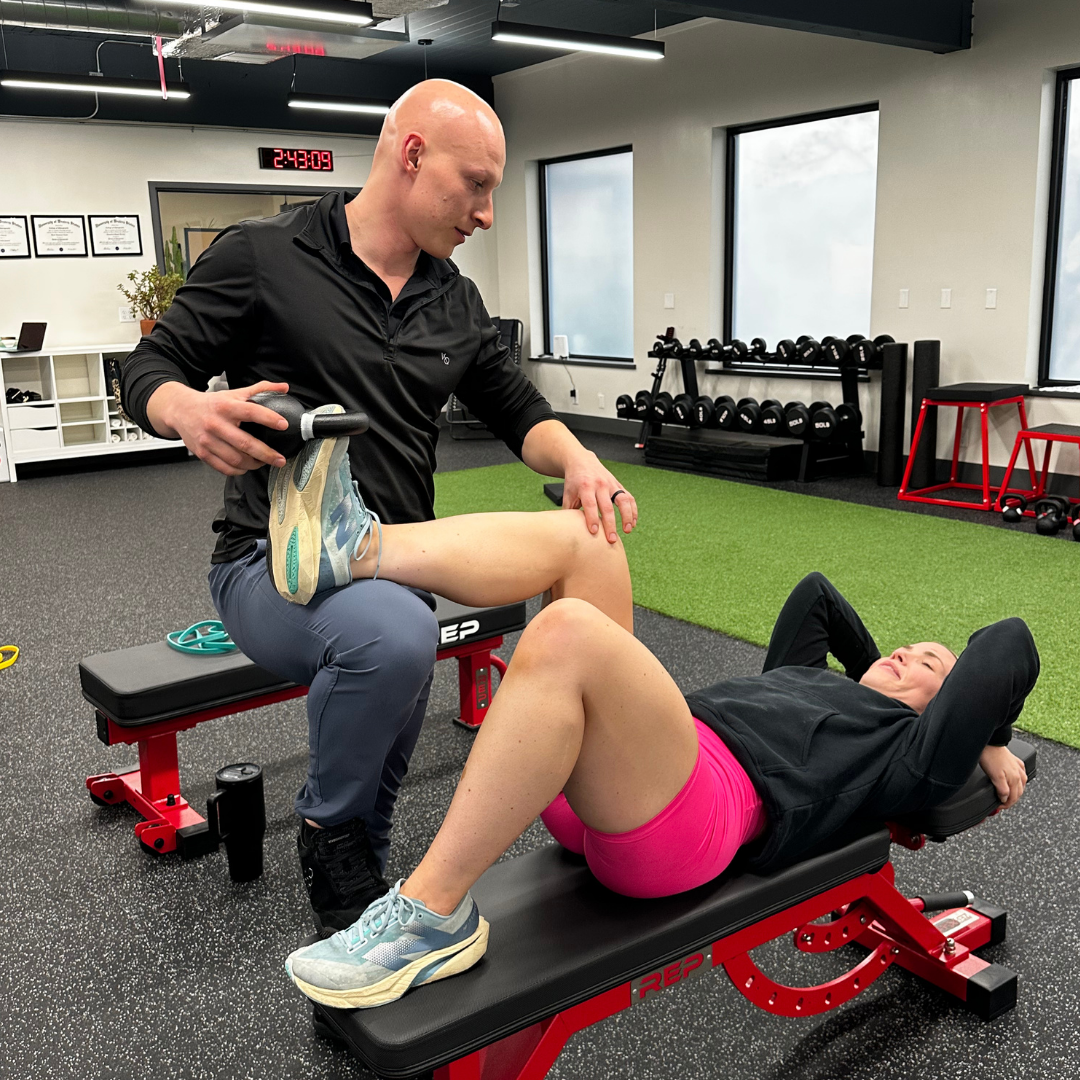
At I.MOVE., we are constantly looking at:
Movement coordination
Compensation patterns
Muscle imbalances
Stability deficits
Force absorption
Hip and ankle mobility
Strength and control during movement
Fear and loss of confidence in movement
Because the reality is this:
Your knee does not move in isolation.
“Bone on Bone” Does Not Automatically Mean “Stop Moving”
One of the most harmful things active people hear is:
“You should stop running.”
“You should stop squatting.”
“You should avoid activity.”
In many cases, movement is actually one of the most important things for long term joint health.
The problem is not always movement itself.
The problem is often how the body is moving.
If the body is compensating poorly, lacking stability, avoiding certain ranges of motion, or loading tissues inefficiently, the knee may continually become irritated no matter how much rest, ice, stretching, or strengthening you try.
That is why generic advice often falls short.
Why Stretching and Strengthening Alone Often Are Not Enough
One of the most common things we hear is:
“I’ve already tried PT.”
“I’ve been stretching.”
“I’ve been strengthening.”
“I’ve watched YouTube videos.”
And honestly, many people are trying hard.
But random exercises without understanding the root cause can keep people stuck for years.
At I.MOVE., we are not just chasing pain.
We are trying to understand why your body is behaving the way it is.
That is a very different approach.
Our Goal Is Not Just Pain Relief
Could your knee feel better temporarily after rest, massage, adjustments, or injections? Sure.
But our bigger question is:
Can your body continue doing the things you love for the next 10, 20, or 30 years?
We work with:
Runners
CrossFitters
Hikers
Pickleball players
Lifters
Active parents
Former athletes
Adults trying to stay active long term
Many of them are not just looking for pain relief.
They are looking for confidence in their movement again.
Schedule Your Free Movement Assessment Today
If you are tired of guessing, frustrated by recurring pain, or worried your diagnosis means you have to slow down forever, I.MOVE.
Why knee pain keeps coming back
Common compensation patterns
Why stretching and strengthening alone often fail
How the body works together during movement
Why imaging does not always tell the whole story
What active adults can do to move more confidently long term
You do not have to accept that knee pain is simply your new normal.
Ready for the next step?You can schedule a call to get in even sooner by clicking here!

I.MOVE. Health and Performance
Conditions Treated:
Low Back Pain
Sciatica
Knee Pain
Hip Pain
Shoulder Pain
Neck Pain and Numbness
Speciality Results:
Help people get back to lifting weights pain free
Support strength training and powerlifters in competition
Improve speed and distance in runners
Eliminate pain after failed chiro/ PT, injections, and surgery
Get in the best shape of your life without pain holding you back


UPCOMING EVENTS!
Every month we host FREE events for those in our community to gain clarity as to why they're dealing with pain and flare ups